Kniha Archaeology Under Dictatorship Michael L. Galaty

Archaeology Under Dictatorship

Jazyk: Angličtina
Vazba: Brožovaná
Dostupnost: Skladem u dodavatele v malém množství
Odesíláme za 13-18 dnů
2 566
Archaeological knowledge is not created in a vacuum and our understanding of the past is profoundly...
Informace o knize

Jazyk
Angličtina
Vazba
Kniha - Brožovaná
Vydáno
2006
Stránek
218
EAN
9780306485091
ISBN
0306485095
Enbook ID
05247224
Hmotnost
680
Rozměry
148 x 210 x 17

Kompletní popis

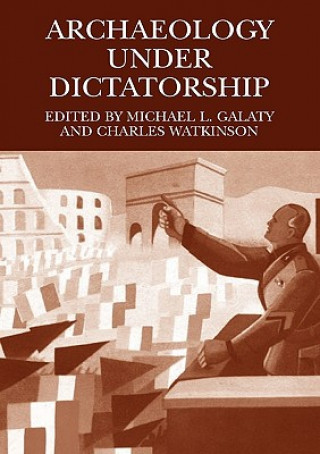
Archaeological knowledge is not created in a vacuum and our understanding of the past is profoundly affected by political ideologies. In fact, a relationship between politics and archaeology develops to some degree in every nation, regardless of social and economic circumstances.The connections between politics and archaeology become most visible, however, within a totalitarian dictatorship, when a dictator seeks to create and legitimize new state-supported ideologies. Any dictator may attempt to control and exploit the past, often by directly controlling archaeologists. The degree to which a nation's archaeological system may continue to be affected after the fall of the dictator depends upon both the previous regime's ideological position and its level of dependence upon archaeology, and the response of archaeologists to the regime, collectively and individually.Archaeology Under Dictatorship demonstrates that the study of archaeology as it evolved under modern dictatorships is today, more than ever, of critical importance. For example, in many European countries those who practiced archaeology under dictatorship are retiring or dying. In some places, their intellectual legacy is being pursued uncritically by a younger generation of archaeologists. Now is the time, therefore, to understand how archaeologists have supported, and sometimes subverted, dictatorial political ideologies. In studying archaeology as practiced under totalitarian dictatorship, that most harsh of political systems, light is shed on the issue of politics and archaeology generally.This volume aims to provide a theoretical basis for understanding the specific effects of totalitarian dictatorship upon the practice of archaeology, both during and after the dictator's reign. The nine essays explore experiences from every corner of the Mediterranean; from the heartlands of Italy, Spain and Greece, to the less well-known shores of Albania and Libya. With its wide-range of case-studies and strong theoretical orientation, this volume is a major advance in the study of the history and politics of archaeology. The Mediterranean focus will also make it thought-provoking reading for classical archaeologists and historians.

Mohlo by vás zajímat

La Grange

Chris C. McCallister
459
570

Ard Bia Cookbook

Aoibheann McNamara
1 125
216

15 Years Loved

Peony Lane Publishing
149
4 225

Modular Synthesis

Ezra J. Teboul
1 565

Zákaznicí kteří koupili tuto knihu koupili také

Aprender a aprender

R. García Carbonell
191
169

Lágrimas del silencio

Carmen Álvarez Álvarez
431

Die Staatshaushaltung der Athener

August BoeckhMax Fränkel
1 603

Sjalvmordsbombaren

Johan Backman
206

Nejrychlejší úroda

Ortrud Griebová
301
254
610