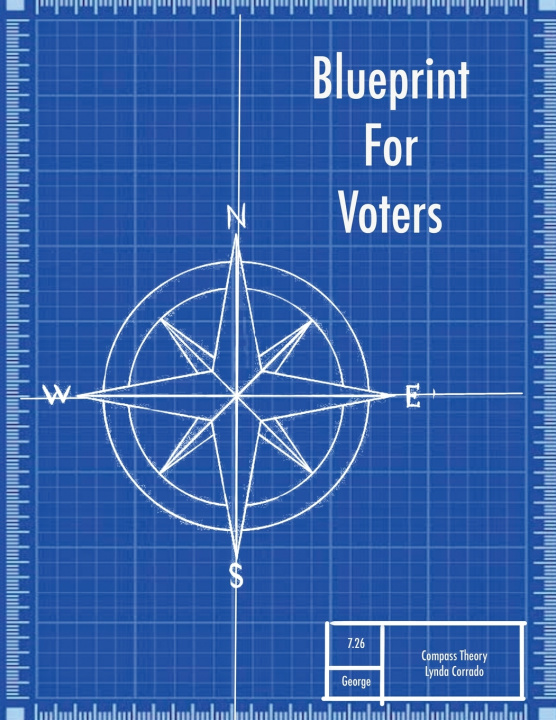
A compass has always guided me, both on the water and in life. Its four quadrants offer a simple way to judge whether my choices are strong and effective, or weak and ineffective-above or below the line. The east and west points remind me that what I do must be reflected in what I think and believe. The blueprint I offer is not complicated; it is a set of questions to help us discern whether a candidate will continue to let our democracy drift, or will chart a new, hopeful course. At its heart, this is about empowering voters to choose leaders who serve the people, not themselves.
As I look toward the uncertain horizon and sense a new wind stirring, I feel compelled to pause and reckon with how far we have strayed from where we once hoped to go. We are, I believe, adrift. The image of a compass at sea has become a touchstone for me, a way to grasp the quiet but persistent forces that have carried us away from our purpose.
Navigation, I have learned, is rarely a matter of grand gestures. Drift works in silence, nudging a vessel off course not with storms but with the gentle, unseen hands of current and wind. What stays with me is how this slow unraveling happens so quietly that by the time we notice, the familiar shoreline is already out of sight. We are left to wonder how we wandered so far.
The Core Thesis of "Democracy Adrift" the companion book os:
"Drift is not a sudden shipwreck; it is a quiet abdication of course-correction. A vessel drifts not because the rudder is broken, but because the crew has stopped looking at the compass."