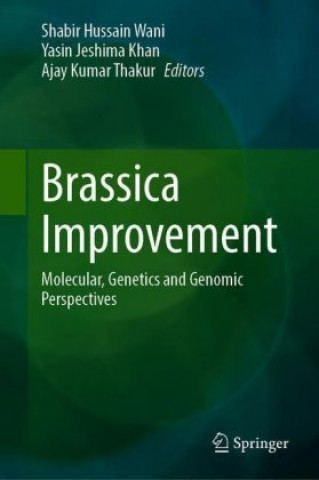
Kniha Brassica Improvement Shabir Hussain Wani

Brassica Improvement

Molecular, Genetics and Genomic Perspectives

Jazyk: Angličtina
Vazba: Pevná
Dostupnost: Skladem u dodavatele
Odesíláme za 10-13 dnů
3 426
Global population is mounting at an alarming stride to surpass 9.3 billion by 2050, whereas simultan...


Informace o knize

Jazyk
Angličtina
Vazba
Kniha - Pevná
Vydáno
2020
Stránek
253
EAN
9783030346935
Enbook ID
24865146
Hmotnost
571
Rozměry
155 x 235 x 20

Kompletní popis

Global population is mounting at an alarming stride to surpass 9.3 billion by 2050, whereas simultaneously the agricultural productivity is gravely affected by climate changes resulting in increased biotic and abiotic stresses. The genus Brassica belongs to the mustard family whose members are known as cruciferous vegetables, cabbages or mustard plants. Rapeseed-mustard is world's third most important source of edible oil after soybean and oil palm. It has worldwide acceptance owing to its rare combination of health promoting factors. It has very low levels of saturated fatty acids which make it the healthiest edible oil that is commonly available. Apart from this, it is rich in antioxidants by virtue of tocopherols and phytosterols presence in the oil. The high omega 3 content reduces the risk of atherosclerosis/heart attack. Conventional breeding methods have met with limited success in Brassica because yield and stress resilience are polygenic traits and are greatly influenced by environment. Therefore, it is imperative to accelerate the efforts to unravel the biochemical, physiological and molecular mechanisms underlying yield, quality and tolerance towards biotic and abiotic stresses in Brassica. To exploit its fullest potential, systematic efforts are needed to unlock the genetic information for new germplasms that tolerate initial and terminal state heat coupled with moisture stress. For instance, wild relatives may be exploited in developing introgressed and resynthesized lines with desirable attributes. Exploitation of heterosis is another important area which can be achieved by introducing transgenics to raise stable CMS lines. Doubled haploid breeding and marker assisted selection should be employed along with conventional breeding. Breeding programmes aim at enhancing resource use efficiency, especially nutrient and water as well as adoption to aberrant environmental changes should also be considered. Biotechnological interventions are essential for altering the biosynthetic pathways for developing high oleic and low linolenic lines. Accordingly, tools such as microspore and ovule culture, embryo rescue, isolation of trait specific genes especially for aphid, Sclerotinia and alternaria blight resistance, etc. along with identification of potential lines based on genetic diversity can assist ongoing breeding programmes. In this book, we highlight the recent molecular, genetic and genomic interventions made to achieve crop improvement in terms of yield increase, quality and stress tolerance in Brassica, with a special emphasis in Rapeseed-mustard.

Mohlo by vás zajímat

590
250

Raven Fantasy

Peter T Raven
259

The Bible of Every Land

Samuel Bagster and Sons
729
147

Story of Ferrari

Stuart Codling
278

Graceland

Lance Schonberg
310

Jellyfish Kite

James Lee Murray
390
129

Itch Rocks

Simon Mayo
161
497

Ivanhoe

Sir Walter Scott
956

Zákaznicí kteří koupili tuto knihu koupili také

251

FRE-BIOGRAPHIE UNIVERSELLE ANC

Louis Gabriel 1773-1858 Michaud
686

Lékařův maraton

Jaroslav Skála
194
621

Preussens Geschichte in Wort und Bild

Schmidt Ferdinand Schmidt
436