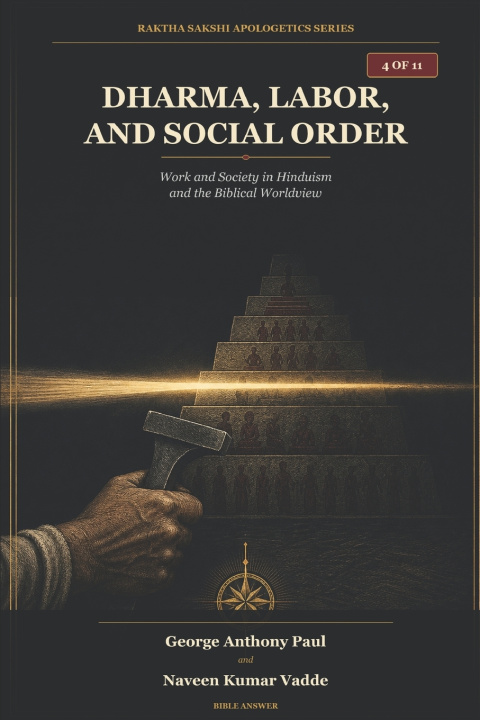
Dharma, Labor, and Social Order
Work and Society in Hinduism and the Biblical Worldview
Is work a calling through which every person serves God and neighbor-or a station fixed by birth within a sacred hierarchy?
Hindu texts contain serious reflection on duty, skill, discipline, wages, contracts, guilds, justice, and the common good. They also connect svadharma to varṇa, command service without resentment, regulate pollution, and assign unequal forms of work and social standing. The result demands more than praise or denunciation. It demands textual comparison.
This volume examines the Bhagavad Gītā, Dharmaśāstras, epic materials, statecraft traditions, and counter-witnesses that appeal to conduct and qualities rather than heredity. Can guṇa and karma open genuine mobility when social duty is inherited? Does spiritual acceptance remove civil inequality? Can economic order be called moral when some bodies, occupations, and communities bear permanent stigma?
The book acknowledges technical skill and ordinary justice wherever the texts genuinely preserve them. But it refuses to confuse administrative sophistication with equal dignity.
The biblical worldview grounds work in creation, not caste. Humanity receives a shared mandate; sin corrupts labor; rulers and masters remain under God's law; and Christ receives people from every nation without turning inherited rank into sacred destiny.
This is a debate about work, worth, and the kind of social order that can call every lawful vocation honorable.