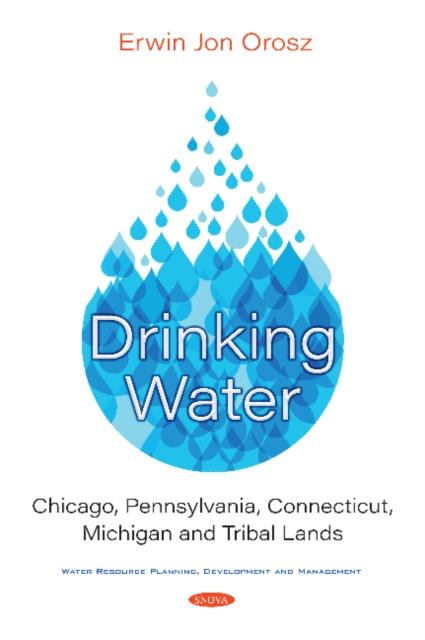
Kniha Drinking Water Erwin Jon Orosz

Drinking Water

Chicago, Pennsylvania, Connecticut, Michigan and Tribal Lands

Jazyk: Angličtina
Vazba: Pevná
Dostupnost: 50 % šance
Prohledáme celý svět
5 670
The U.S. Geological Survey (USGS) Environmental Health Mission Area (EHMA) is providing comprehensiv...


Informace o knize

Jazyk
Angličtina
Vazba
Kniha - Pevná
Vydáno
2020
Stránek
272
EAN
9781536172843
ISBN
1536172847
Enbook ID
25382006
Hmotnost
690

Kompletní popis

The U.S. Geological Survey (USGS) Environmental Health Mission Area (EHMA) is providing comprehensive science on sources, movement, and transformation of contaminants and pathogens in watershed and aquifer drinking-water supplies and in built water and wastewater infrastructure in the Greater Chicago Area. The focus of chapter 1 is on assessing point-of-use (tapwater) drinking-water exposure pathways for a broad range of potential environmental contaminants and exploring infrastructure-related factors that could alter or transform chemical constituents or microbial communities in drinking water (such as treatment plant technology, distribution system characteristics, private plumbing components, and point-of-use treatment) Pennsylvania has the second highest number of residential wells of any state in the Nation with approximately 2.4 million residents that depend on groundwater for their domestic water supply. The groundwater used for domestic water supply in Bradford County is obtained primarily from shallow bedrock and from unconsolidated (glacial) deposits that overlie the bedrock. As reported in chapter 2, data for 72 domestic wells were collected and analyzed for a wide range of constituents that could be evaluated in relation to drinking water health standards, geology, land use, and other environmental factors. The occurrence of arsenic and uranium in groundwater at concentrations that exceed drinking-water standards is a concern because of the potential adverse effects on human health. The Connecticut Department of Public Health reported that there are about 322,600 private wells in Connecticut. The State does not require that existing private wells be routinely tested for arsenic, uranium, or other contaminants. The U.S. Geological Survey (USGS) completed an assessment in 2016 on the distribution of concentrations of arsenic and uranium in groundwater from bedrock in Connecticut. Chapter 3 presents the major findings for arsenic and uranium concentrations from water samples collected from 2013 to 2015 from private wells. The circumstances and response to Flint''s drinking water contamination involved implementation and oversight lapses at the EPA, the state of Michigan, the Michigan Department of Environmental Quality (MDEQ), and the city of Flint. Chapter 4 evaluates additional matters concerning the agency''s management controls when responding to the Flint contamination incident. Federal agencies have identified several billion dollars in existing and future tribal drinking water and wastewater infrastructure needs. Chapter 5 examines the extent to which selected federal agencies identified tribes'' drinking water and wastewater infrastructure needs and funded tribal water infrastructure projects, including tribes'' most severe sanitation deficiencies.

Mohlo by vás zajímat

30

Becoming a Christian

Timothy Vonwald
361
243

Preservation

Jock Serong
214
349
672

Runaway Files

Tennessee Nate
431

Living by Faith

David Venable
410

Johnny Once

Robert Gangi
460

Industrial Geography of Cocaine

Christian Michael Allen
1 618
2 000

Burning Bright

Helen Dunmore
606
288

Zákaznicí kteří koupili tuto knihu koupili také