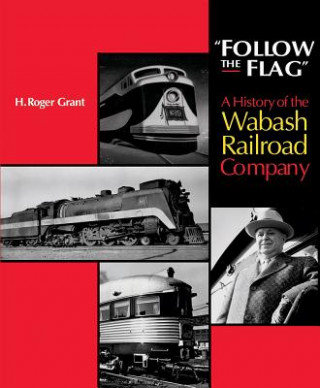
"Follow the Flag" offers the first authoritative history of the Wabash Railroad Company, a once vital inter-regional carrier. The corporate saga of the Wabash involved the efforts of strong-willed and creative leaders, but this book provides more than a traditional business history. Noted transportation historian H. Roger Grant captures the human side of the Wabash, ranging from the medical doctors who created an effective hospital department to the worker-sponsored social events. And Grant has not ignored the impact the Wabash had in the "Heart of America." Like most major American carriers, the Wabash grew out of an assortment of small firms, including the first railroad to operate in Illinois, the Northern Cross. Thanks in part to the genius of financier Jay Gould, by the early 1880s what was then known as the Wabash, St. Louis & Pacific Railway reached the principal gateways of Chicago, Des Moines, Detroit, Kansas City, and St. Louis. In the 1890s, the Wabash gained access to Buffalo and direct connections to Boston and New York City. One extension, spearheaded by Gould's eldest son, George, fizzled.
In 1904 entry into Pittsburgh caused financial turmoil, ultimately throwing the Wabash into receivership. A subsequent reorganization allowed the Wabash to become an important carrier during the go-go years of the 1920s and permitted the company to take control of a strategic "bridge" property, the Ann Arbor Railroad. The Great Depression forced the company into another receivership, but an effective reorganization during the early days of World War II gave rise to a generally robust road. Its famed Blue Bird streamliner, introduced in 1950 between Chicago and St. Louis, became a widely recognized symbol of the "New Wabash." When "merger madness" swept the railroad industry in the 1960s, the Wabash, along with the Nickel Plate Road, joined the prosperous Norfolk & Western Railway, a merger that worked well for all three carriers. Immortalized in the popular folk song "Wabash Cannonball," the Midwestern railroad has left important legacies. Today, forty years after becoming a "fallen flag" carrier, key components of the former Wabash remain busy rail arteries and terminals, attesting to its historic value to American transportation.