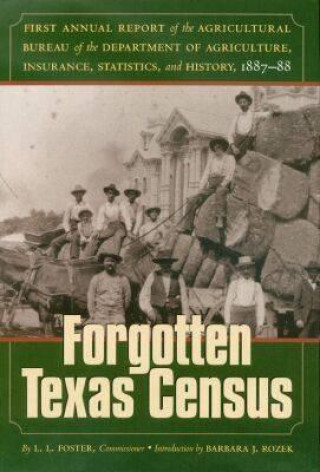
A wide-angle portrait of Texas in the 1880s is typically a difficult picture to capture. But a unique government document of more than three hundred pages does it as well as our imagination will allow by providing the statistics and data to make it possible. In 1887, a state bureaucrat -- Lafayette Lumpkin Foster -- used his position as head of the Department of Agriculture, Insurance, Statistics, and History to create a compendium of wide-ranging information for Texans and people interested in Texas. It was a treasure trove then and even more so now for the modern reader and researcher. Open the pages of his First Annual Report of the Agricultural Bureau and you have a unique window into understanding the people, towns, counties, railroads, and farming experiences that made up late-nineteenth-century Texas. The Texas State Historical Association presents this document, out-of-print for more than one hundred and ten years, as the latest in its Fred H. and Ella Mae Moore Texas History Reprint Series.Rare for a document of its era, this agricultural report notes, in a county-by-county format, questions of gender, labor, and ethnicity not available anywhere else. What did female teachers earn compared to male teachers? How many hired laborers worked in the fields and what was their average length of employment? How many divorces and marriages took place in 1887 in Zapata County? What churches were represented? This report will provide the recorded answer, plus give the insightful researcher the ability to compare statistically one county with another. How many Norwegians, Mexicans, Germans, or Jews lived in each county? How many families were "white"? How many "colored"? Race,ethnicity, and gender are just a few categories to be explored by the person interested in describing the expansive, developing countryside of Texas in the final quarter of the nineteenth century.In addition to the county tallies, Foster and his bureau employees provided a forty-