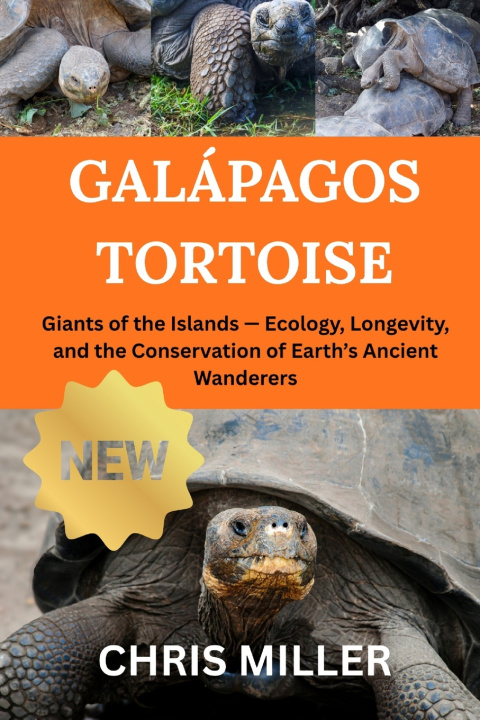
Discover the life and care of the giant Galapagos tortoise with this in-depth guide. Covering habitat, diet, conservation, breeding, and behavior, it is perfect for reptile enthusiasts, conservationists, and wildlife educators. Learn about the species' natural ecology, survival strategies, and human-led conservation efforts. This book provides practical advice for keeping captive populations healthy while promoting awareness and appreciation of one of the world's most iconic tortoises.
Galápagos Tortoises exhibit remarkable variation in size, shape, and shell morphology, reflecting their adaptation to diverse island habitats.
General Physical Characteristics
Size: Adult tortoises can weigh 250-400 kg (550-880 lbs) and measure up to 1.5 meters in length.
Limbs: Thick, columnar legs with strong claws for walking over uneven terrain and digging nests.
Head and Neck: Long, retractable necks allow browsing on elevated vegetation; males often have longer, more robust necks than females.
Lifespan: Can exceed 100 years in the wild, with some individuals living over 150 years in captivity.
Shell Morphologies
Dome-Shaped Shell
Rounded, high carapace.
Adapted for humid highlands with abundant vegetation.
Neck height is sufficient for grazing low-lying plants; little need to reach elevated foliage.
Found on islands like Santa Cruz and Isabela.
Saddleback Shell
Carapace rises at the front, resembling a saddle.
Neck extends upward more prominently, allowing tortoises to reach cactus pads and higher vegetation in arid lowlands.
Efficient adaptation for sparse, dry habitats where food is elevated.
Found on islands such as Española, Pinta, and Floreana.
Sexual Dimorphism
Males are generally larger, with longer necks and concave plastrons to facilitate mating.
Females tend to be smaller with flatter shells, optimizing mobility and egg-laying.