Kniha God Owes Us Nothing Leszek Kolakowski

God Owes Us Nothing

Brief Remarks on Pascal's Religion and on the Spirit of Jansenism

Jazyk: Angličtina
Vazba: Pevná
Dostupnost: Očekávaný dotisk
Termín neznámý
2 583
This volume presents a new interpretation of a centuries-long debate in Christianity: how to reconci...


Informace o knize

Jazyk
Angličtina
Vazba
Kniha - Pevná
Vydáno
1995
Stránek
248
EAN
9780226450513
Enbook ID
04546522
Hmotnost
440
Rozměry
145 x 220 x 25

Kompletní popis

This volume presents a new interpretation of a centuries-long debate in Christianity: how to reconcile the existence of evil in the world with the goodness of an omnipotent God. In Augustinian doctrine, evil is the absence of good, God is omnipotent, and individuals are predestined to salvation or damnation. We are powerless to influence God's bestowal of grace by either word or deed: in short, God owes us nothing. Augustine's view was attacked as unduly harsh by the 4th-century monk Pelagius, whose followers believed that humans can earn grace through good acts. The Church condemned this teaching as heresy, but controversies concerning evil, free will, divine omnipotence, grace, and predestination continued over the centuries. In the 17th century, the theologian Jansenius returned to Augustinian doctrine and created his own heresy: he repudiated free will, accepted predestination and taught that God is free to bestow grace upon the wicked and withhold it from the good; because of original sin, no one is deserving of grace. Renowned as a philosopher with deep religious sensitivities, Kolakowski confronts this controversy. He argues that the teachings of Jansenius and Augustine both reflect the very principles and spirit upon which the Church was founded, and to reject one is to reject the other. His central thesis is that by condemning Jansenism, the Church also found a way to abandon its 1000-year adherence to the doctrines of Saint Augustine. Kolakowski continues this critical encounter with an examination of Pascal, whose powerful moral philosophy has roots in Jansenism. Pascal affirmed the divine omnipotence of God in his famous Wager: if God does not exist, nothing is lost by not having faith; if God does exist, the believer gains eternal life through faith. Kolakowski interprets the Wager as a sign of the limitations of reason and a necessity for a mystical faith. Pascal's religion is thus true both to the spirit of Jansenius and of Augustine.

Mohlo by vás zajímat

191

Introduction to Rpa

Abhinav Sabharwal
171
2 089
1 317
347

The Starless Sea

Erin Morgenstern
220
307

Rhymes in Red

W. Phillpotts Williams
338
233
201
2 504

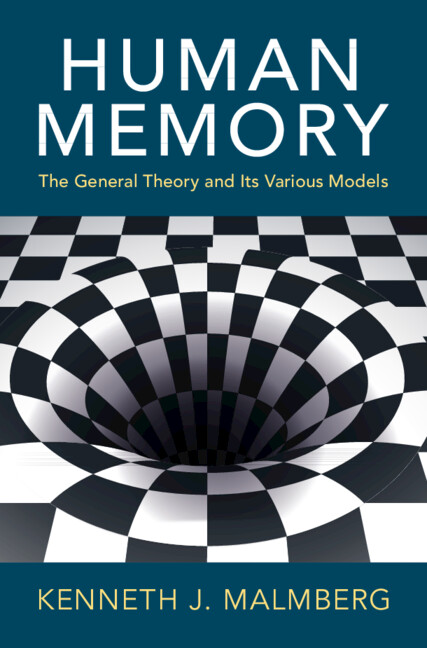
Human Memory

Kenneth J. Malmberg
922

Zákaznicí kteří koupili tuto knihu koupili také

293
287

Krieg dem Kriege

Ernst Friedrich
398

Benkő Laci

Havas Henrik
231

Nesmrtelný Cheops

Valery Esperian
307

Zur Farbenlehre (Grossdruck)

Johann Wolfgang Goethe
983

Jedna rzecz

Keller Gary
133

L'élégance du hérisson

Muriel Barberyová
237

Ganz schön clever

Schmidt Spiele
295

Tarot de Marseille

Philippe Camoin
760
148