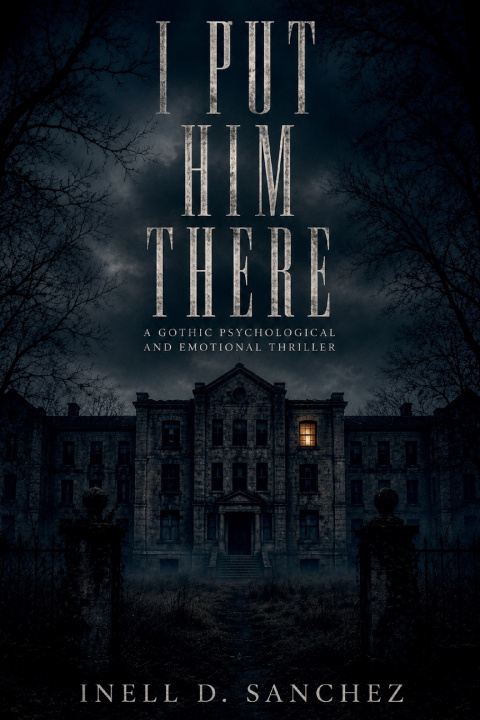
Some buildings hold what was left inside them.
Daniel Voss has spent nineteen years restoring other people's broken structures. Asylums, courthouses, abandoned institutions - the bones of places that outlasted their purpose. He is precise, unhurried, and very good at his work. He has never examined why.
When a preservation trust contracts him to assess a long-abandoned psychiatric facility in rural upstate New York, Daniel accepts without hesitation. The Harrowgate Institute for Psychiatric Care has been standing empty for thirty-one years, its fieldstone walls intact, its records sealed, its third-floor rooms untouched since the day it closed.
Daniel knows the address. He has known it since he was sixteen years old and a family court clerk read it into the record in a flat official voice, and he sat in a hard chair and kept his hands flat on his thighs and did not look at the door.
He does not tell anyone this.
What begins as a professional assessment becomes something else entirely as Daniel moves deeper into the facility - past the ward rosters, past the locked doors, past the corridor that appears on no floor plan - and finally into Room 14, where his father lived for seven years and left something on the wall that no structural report could ever document.
"I Put Him There" is a gothic psychological thriller about guilt carried so long it becomes architecture, about the buildings we enter to avoid the ones inside ourselves, and about what it costs - and what it means - to finally open the door you have been standing outside for twenty-eight years.
Atmospheric, devastating, and rendered with the precise literary voice of a man who has spent a lifetime putting the right language around the wrong things, this is a novel about the structures we build to contain what we cannot face - and what happens when they fail.
For readers of Daphne du Maurier, Kate Atkinson, and Paul Tremblay. For anyone who has ever restored something broken that was not a building.