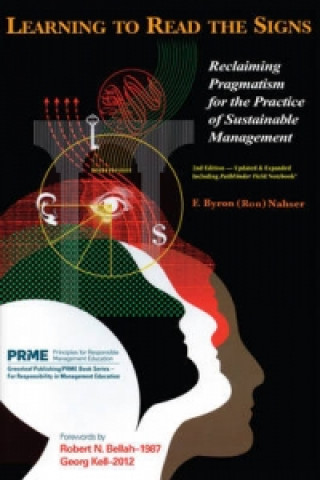
Kniha Learning to Read the Signs F.Byron (Ron) Nahser

Learning to Read the Signs

Jazyk: Angličtina
Vazba: Pevná
Dostupnost: 50 % šance
Prohledáme celý svět
3 888
It's not what we know, but how we learn. This is the key that Learning to Read the Signs uses in ord...

Informace o knize

Jazyk
Angličtina
Vazba
Kniha - Pevná
Vydáno
2013
Stránek
240
EAN
9781907643903
ISBN
1907643907
Enbook ID
02576227
Hmotnost
512
Rozměry
241 x 162 x 21

Kompletní popis

It's not what we know, but how we learn. This is the key that Learning to Read the Signs uses in order to evaluate and apply ideas and facts to one's organization life. The book asks the reader to go back to and reclaim pragmatism: an activity of thought involving four parts: Investigation, Hypothesis, Action, and Testing. Pragmatism is a method of interpretation or inquiry which offers to the thoughtful business practitioner a way to better understand the reality in which we operate, to think critically and creatively, and for business people to think together to make the best use of all our perspectives and talents. Questions raised in this book include: What are the signs telling us? Where are we headed and why? Why are things going the way they are? What is our purpose? Examples abound of companies and organizations that have failed to "read the signs": the automobile and the financial services industries are obvious examples. Doing business successfully in the 21st century means becoming aware of the filters that modify and limit business vision in our culture. Without this awareness, many businesses will continue to fall into short-term reactive thinking. In a world facing unprecedented social, environmental, and economic challenges, learning to read the signs is a business imperative. This is not a how-to book in the sense that it provides ten easy answers to everyday business problems. The help it gives is much more profound. This book outlines a mode of inquiry that can be used to solve cognitive as well as ethical questions. Drawing on the deepest resources of philosophical pragmatism, Nahser shows us that often we do not even know the right question to ask, that we must start by trusting our doubts and seeing where they lead, so that we can even begin to ask the right questions. He brings philosophy down to earth by showing that a practical philosophy can call into question our outworn assumptions, open up new lines in inquiry, and lead to conclusions we never imagined at the beginning of the process - conclusions not just about what to do next, but about our larger purposes, those frameworks that give us meaning and direction. In this long-overdue and radical update to his seminal book, Ron Nahser turns his attention to how pragmatism can be can be practiced by the management of business, government, and non-profit organizations to create both success and a better world for all.

Mohlo by vás zajímat

Computing with Maple

Francis Wright
2 083

Fun with 50 States

Candela Ferrandez
221

Art Nouveau

Anton Seder
304
1 127

U-TURN KiLLuR

Teric Darken
432
237

Zákaznicí kteří koupili tuto knihu koupili také

Cymru'r Gyfraith

R. Gwynedd Parry
565

Matematika zločinu

Magdaléna Sodomková
251
474

Gekaufte Zeit

Wolfgang Streeck
437