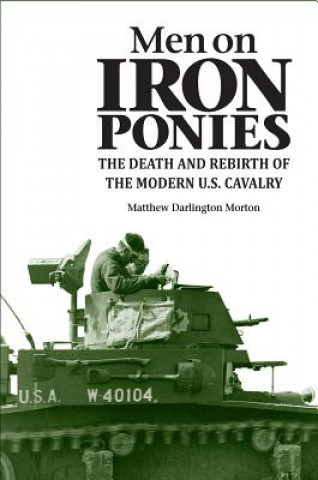
At the end of World War I, the United States Army - despite its recent experience with trenches, machine guns, barbed wire, airplanes, and even tanks - maintained a horse-mounted cavalry from a bygone era. From the end of World War I until well into World War II, senior leaders remained convinced that traditional cavalry units were useful in reconnaissance, and horses retained a leading role. Months into World War II, the true believers in the utility of the horses had their hopes shattered as the last horse cavalry units either dismounted to fight as infantry or traded their oat-eating horses for gasoline-guzzling 'iron ponies.' The horse belonged to the past, and the armored truck was the way of the future. Morton has examined myriad official records, personal papers, doctrine, and professional discourse from an era of intense debate about the future of the U.S. Cavalry. He has captured the emotion of the conflict that ultimately tore the branch apart by examining the views of famous men such as George S. Patton, Jr., Lesley J. McNair, George C. Marshall, and Adna R. Chaffee, Jr. More importantly, Morton brings new light to lesser known figures - John K. Herr, I. D.
White, Lucian K. Truscott, Willis D. Crittenberger, Charles L. Scott, and William S. Biddle - who played equally important roles in shaping the future of the U.S. Cavalry and in determining what function it would play during World War II. At the heart of the book are the myriad questions about how to equip, train, and organize for a possible future war, all the while having to retain some flexibility to deal with the war as it actually happens. Morton goes beyond the explanation of what occurred between the world wars by showing how the debate about the nature of the next war impacted the organization and doctrine the reformed U.S. Cavalry would employ on the battlefields of North Africa, Italy, the beaches of Normandy, and through the fighting in the Ardennes to the linkup with Soviet forces in the heart of Germany. Leaders then, as now, confronted tough questions. What would the nature of the next war be? What kind of doctrine would lend itself to future battlefields? What kind of organization would best fulfill doctrinal objectives, once established, and what kind of equipment should that organization have?
The same challenges face Army leaders today as they contemplate the nature of the next war. Morton analyzes the people and personalities involved in the U.S. Cavalry's conversion from horses to machines.