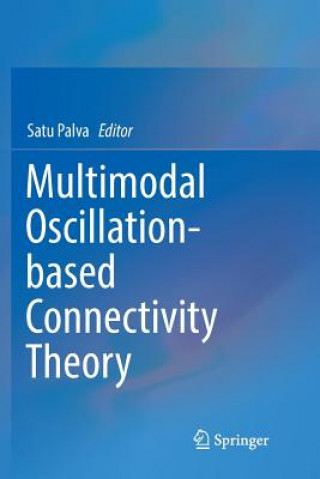
Kniha Multimodal Oscillation-based Connectivity Theory Satu Palva

Multimodal Oscillation-based Connectivity Theory

Autor: Satu Palva
Jazyk: Angličtina
Vazba: Brožovaná
Dostupnost: Skladem u dodavatele
Odesíláme za 5-8 dnů
2 286
Systems-level neuronal mechanisms that coordinate the temporally, anatomically, and functionally dis...
Informace o knize

Autor
Jazyk
Angličtina
Vazba
Kniha - Brožovaná
Vydáno
2018
Stránek
147
EAN
9783319812373
ISBN
9783319812373
Enbook ID
19703640
Hmotnost
2467
Rozměry
155 x 235 x 9

Kompletní popis

Systems-level neuronal mechanisms that coordinate the temporally, anatomically, and functionally distributed neuronal activity into coherent cognitive operations in the human brain have remained poorly understood. In humans, neuronal oscillations and synchronization can be recorded non-invasively with electro- and magnetoencephalography (EEG and MEG) that have excellent temporal resolution and an adequate spatial resolution when combined with source-reconstruction methods. In this book, leading authors in the field describe how recent methodological advances have paved the way to several major breakthroughs in the observations of large-scale synchrony from human non-invasive MEG data. This volume also presents the caveats influencing analyses of synchronization. These include the non-homogeneous sensitivity of MEG to superficial cortical sources, and, most importantly, the multitude of consequences of linear mixing. Linear mixing is an immense confounder in the sensor-level analyses of synchronization, but is also present at the source level. Approaches that can be used to avoid or compensate for these issues are then discussed. Thereafter, several authors take up a number of the functional roles that large-scale synchronization has in cognition. The authors assess how the spatio-temporal and -spectral organization and strength of both local and large-scale synchronized networks are associated with conscious sensory perception, visual working memory functions, and attention. These chapters summarize several lines of research showing how the strength of local and inter-areal oscillations in both cortical and subcortical brain structures is correlated with cognitive functions. Together these data suggest that synchronized neuronal oscillations may be a systems-level neuronal mechanism underlying the coordination of distributed processing in human cognition. In line with this argument, other authors go on to describe how oscillations and synchronization are altered in clinical populations, complementing the data presented on healthy subjects. Importantly, this book includes chapters from authors using many different approaches to the analyses of neuronal oscillations, ranging from local oscillatory activities to the usage of graph theoretical tools in the analyses of synchronization. In this way the present volume provides a comprehensive view on the analyses and functional significance of neuronal oscillations in humans. This book is aimed at doctoral and post-doctoral students as well as research scientists in the fields of cognitive neuroscience, psychology, medicine, and neurosciences.

Mohlo by vás zajímat

Chameleons

Alfred Stone
455
620
103
230

The Everlasting Man

G. K. Chesterton
538

Room for Love

Andrea Meyer
380
1 625
316
100

Zákaznicí kteří koupili tuto knihu koupili také

Ocalona

Diana Palmer
176

Rwanda

Romuald UZABUMWANA
1 082

A tulajdonosi érték

Alfred Rappaport
228
404

Navždy mojou

Emily D. Beňová
208

Helmstedt

Melsene Bittó
398
221

Trnová koruna nejsou zuby

Kamil Marcel Hodáček
158
588