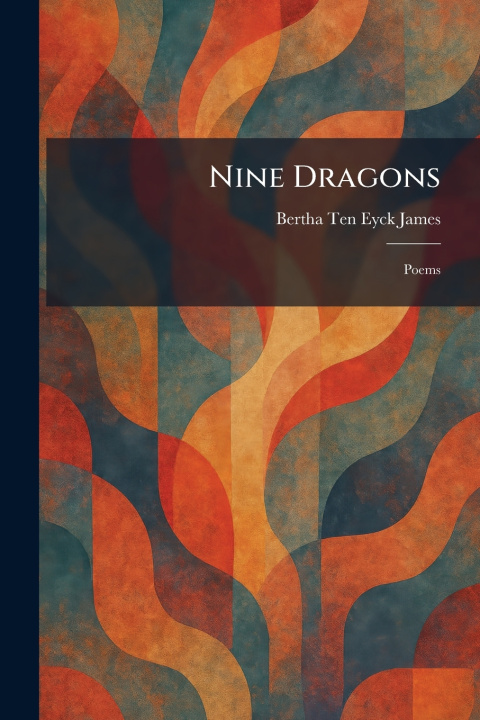
"Nine Dragons: Poems" is a compelling collection of lyric verse by Bertha Ten Eyck James that captures the artistic and literary spirit of the early 20th century. The collection is characterized by its vivid imagery and rhythmic grace, exploring themes that range from the natural world to deep personal introspection. James's work often reflects a delicate balance between traditional poetic forms and the emerging modern sensibilities of her time, creating a reading experience that is both timeless and reflective of its historical context.
The poems within "Nine Dragons: Poems" demonstrate the author's mastery of language and her ability to evoke profound emotion through careful observation. Whether contemplating the landscape or the complexities of the human spirit, James provides a nuanced perspective that invites readers to pause and reflect. This volume serves as an important contribution to the corpus of American poetry from the 1920s, highlighting the creative voice of a woman writer dedicated to the craft of verse. It remains a valuable work for scholars of literary history and enthusiasts of classic poetry alike, offering a window into the evocative power of early modern lyrical expression.
This work has been selected by scholars as being culturally important, and is part of the knowledge base of civilization as we know it. This work was reproduced from the original artifact, and remains as true to the original work as possible. Therefore, you may see the original copyright references, library stamps (as most of these works have been housed in our most important libraries around the world), and other notations in the work.
This work is in the public domain in the United States of America, and possibly other nations. Within the United States, you may freely copy and distribute this work, as no entity (individual or corporate) has a copyright on the body of the work.
As a reproduction of a historical artifact, this work may contain missing or blurred pages, poor pictures, errant marks, etc. Scholars believe, and we concur, that this work is important enough to be preserved, reproduced, and made generally available to the public. We appreciate your support of the preservation process, and thank you for being an important part of keeping this knowledge alive and relevant.