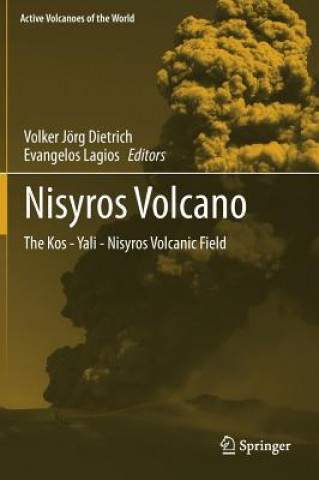
Kniha Nisyros Volcano Volker Jörg Dietrich

Nisyros Volcano

The Kos - Yali - Nisyros Volcanic Field

Jazyk: Angličtina
Vazba: Pevná
Dostupnost: Skladem u dodavatele
Odesíláme za 10-13 dnů
4 111
This book presents the first compilation of scientific research on the island of Nisyros, involving...


Informace o knize

Jazyk
Angličtina
Vazba
Kniha - Pevná
Vydáno
2017
Stránek
339
EAN
9783319554587
ISBN
3319554581
Enbook ID
15869821
Hmotnost
1135
Rozměry
178 x 254 x 24

Kompletní popis

This book presents the first compilation of scientific research on the island of Nisyros, involving various geoscientific disciplines. Presenting a wealth of illustrations and maps, including a geological map of the volcano, it also provides valuable insights into the geothermal potential of Greece. The island of Nisyros is a Quaternary volcano located at the easternmost end of the South Aegean Volcanic Arc. The island is nearly circular, with an average diameter of 8 km, and covers an area of approximately 42 km2. It lies above a base of Mesozoic limestone and a thin crust, with the mantle-crust transition located at a depth of approximately 27 km. The volcanic edifice of Nisyros comprises a succession of calc-alkaline lavas and pyroclastic rocks, as well as a summit caldera with an average diameter of 4 km. Nisyros marks the most recent volcano in the large prehistoric volcanic field between Kos-Yali-Strongyli-Pyrgousa-Pachia-Nisyros, where the largest eruption ("Kos Plateau Tuff") in the history of the eastern Mediterranean devastated the Dodecanese islands 161,000 years ago. Although the last volcanic activity on Nisyros dates back at least 20,000 to 25,000 years, it encompasses an active hydrothermal system underneath the volcano with temperatures of roughly 100°C at the Lakki plain, the present-day caldera floor and 350°C at a depth of 1,550 m. A high level of seismic unrest, thermal waters and fumarolic gases bear testament to its continuous activity, which is due to a large volume of hot rocks and magma batches at greater depths, between 3,000 and 8,000 m. Violent hydrothermal eruptions accompanied by major earthquakes occurred in 1873 and 1888 and left behind large, "world-wide unique" explosion craters in the old caldera. Through diffuse soil degassing, the discharge of all hydrothermal craters in the Lakki plain releases 68 tons of hydrothermal-volcanic derived CO2 and 42 MW of thermal energy per day. This unique volcanic and hydrothermal environment is visited daily by hundreds of tourists.

Mohlo by vás zajímat

After the Death of Don Juan

Sylvia Townsend Warner
247
278
1 420
984

Lighter As We Go

Mindy Greenstein
412
789
1 557
299
217
308

Love Hypothesis

Ali Hazelwood
411

Green Politics

J Radcliffe
2 568

Message

Fernando Pessoa
412

Plato at the Googleplex

Rebecca Newberger Goldstein
270

Zákaznicí kteří koupili tuto knihu koupili také

Oberammergau

Hans-Michael Koetzle
651
476

Ley de la autocreación

Félix Torán Martí
559

Ausgewahlte Werke in sechs Banden

Gotthold Ephraim Lessing
436

Asalto al poder

EDUARDO GONZALEZ CALLEJA
740

Musica Historica

Printz Wolfgang Caspar
436