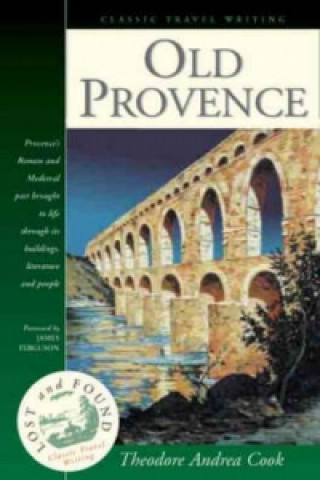
Kniha Old Provence Theodore Cook

Old Provence

Autor: Theodore Cook
Jazyk: Angličtina
Vazba: Brožovaná
Vydavatel: Signal Books Ltd
Dostupnost: Očekávaný dotisk
Termín neznámý
306
Journeying through Southern France in the first years of the 20th century, Theodore Andrea Cook disc...


Informace o knize

Jazyk
Angličtina
Vazba
Kniha - Brožovaná
Vydáno
2001
Stránek
384
EAN
9781902669199
ISBN
1902669193
Enbook ID
04312978
Vydavatel
Hmotnost
468
Rozměry
135 x 196 x 30

Kompletní popis

Journeying through Southern France in the first years of the 20th century, Theodore Andrea Cook discovers a landscape where the presence of Phoenicians, Greeks and Romans is still evident in the Mediterranean's surviving architecture. In Arles, Nimes, Orange and Frejus, he witnesses the wonders of Roman arenas, temples and monuments. At the imposing aqueduct of the Pont du Gard he sees the genius of Roman engineering. Cook's survey of Provencal history also encompasses the Middle Ages, when religious conflict and bloody warfare scarred the region. At Les Baux he explores the ruins of a once-great stronghold; in Avignon he traces the footsteps of 14th-century popes in their palace; in Beaucaire and Tarascon he visits the sites of thriving medieval market towns and royal castles. First published in 1905, this is an insight not only into the area's history and architecture, but also its literary and cultural significance. Looking at the work and influence of writers such as Petrarch and Mistral, Cook reveals the importance of language, romance and regional identity in Provence.

Mohlo by vás zajímat

121
733
3 882
208
437

My Friend Walter

Michael Morpurgo
237

Airfix Kits

Trevor Pask
218
953
429
289

You, Sir, Are an Idiot

Richard Edward Larsen
314
487
5 473

Zákaznicí kteří koupili tuto knihu koupili také

Ein Schuss kommt selten allein

Johanna Hofer von Lobenstein
325
188

Macht des Hades

Raine Eliza Raine
348

Die Ängstlichen

Peter Henning
286

H?TTA FYRIR rá?gjafarstjórnun

Bishop Ochei Innocent
322
429
484

Prisonniere

Marcel Proust
657