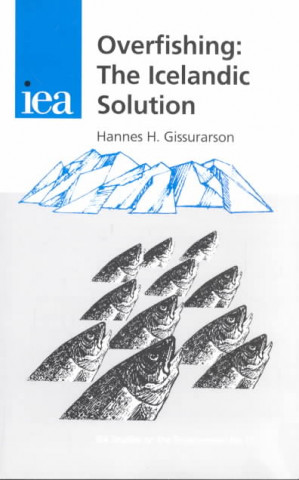
Kniha Overfishing Hannes H. Gissurarson

Overfishing

The Icelandic Solution

Jazyk: Angličtina
Vazba: Pevná
Dostupnost: 50 % šance
Prohledáme celý svět
288
In this monograph, Professor Gissurarson explains the Icelandic model of fisheries management, Indiv...

Informace o knize

Jazyk
Angličtina
Vazba
Kniha - Pevná
Vydáno
2000
Stránek
68
EAN
9780255364898
ISBN
025536489X
Enbook ID
04560052
Hmotnost
124
Rozměry
137 x 219 x 6

Kompletní popis

In this monograph, Professor Gissurarson explains the Icelandic model of fisheries management, Individual Transferable Share Quotas (ITQs), implemented in 1979 to reverse the decline in Icelandic fish stocks. Access to Icelandic fisheries was traditionally open to all. In the 1960s and 1970s excessive catches of herring and then cod led to a decline in stocks of these important species in Iceland's waters. In response, Iceland's government imposed restrictions on the number of days trawlers could put to sea to catch certain species. This led to fishing Derbies, where fishermen competed to catch as many fish as possible in the limited time available. Inevitably, catches continued to exceed sustainable levels. Starting in 1979, the Icelandic government gradually introduced a system of individual transferable share quotas (ITQs), which essentially give boat owners the right to catch a specific proportion of the total allowable catch (TAC) of certain species. If a boat owner does not wish to use all his ITQ he can sell part of it to someone else. This encourages more efficient use of the capital invested in boats and equipment. Because ITQs entitle their owners to a specific share of the future stock of fish, they create incentives to ensure that stocks are sustainable. Since the introduction of ITQs, capital invested in Icelandic fisheries (boats and equipment) has been gradually falling and catches have fallen to sustainable levels, whilst the value of catches has risen. Because of the success of the ITQ system and the wealth it has created, there is now political pressure for an imposition of a resource rent tax. But such a tax would be contrary to the interests of effective conservation of fish stocks. A more appropriate next step would be to introduce a cost-recovery charge and, as a quid pro quo, give ITQ owners greater say in the administration and enforcement of the system. Owners of ITQ would have stronger incentives to ensure that catch levels were set at the economically optimal level.

Mohlo by vás zajímat

47 Ronin

James Murdoch
351

Bass Wisdom

Homer Circle
326

Vicodin Thieves

Chip Jacobs
371
1 774

Zákaznicí kteří koupili tuto knihu koupili také

1 082

COCINA DEL JABALÍ

FUNDACION ALICIA
349
338

Valašský král

Josef Kalus
130

Banken und Kunst

Maik Zöllner
377