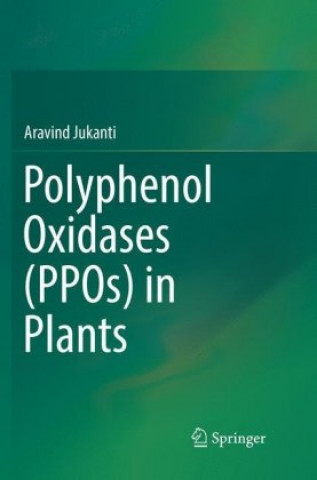
This book is first of its kind exclusively dedicated to plant polyphenol oxidases (PPOs), highlighting their importance in the food processing industry. By reviewing the scientific developments of the past several decades, it offers a comprehensive overview of various aspects of plant PPOs, including chemistry, structure, functions, regulation, genetics/genomics and molecular aspects. PPOs are copper-containing proteins found in several plant species that catalyze the hydroxylation of o -monophenols to o -diphenols and oxidation of the o -dihydroxyphenols to o -quinones. Further, the quonines undergo self-polymerization or react with amines/thiol groups to produce brown/dark coloration of products. All the PPOs contain two Cu-binding sites (CuA and CuB) as their central domain, these interact with phenolic substrates and molecular oxygen. Several of the plant PPOs contain an N-terminal transit peptide (~80-100 amino acids
) necessary for plastid import. The PPOs occur in latent form that are activated by various treatments including acid and base shock, exposure to detergents or proteolytic degradation. The pH optimum of PPOs varies widely depending upon different plant species but is usually ~4.0 - 8.0. Similarly, the optimum temperature also varies as per the source and substrate involved ranging from 30 to 45 °C.
Multiple PPO isoforms have been reported in several plant species, and the chromosomal location of PPOs has also been studied in some species. The physiological role (s) of PPOs is not entirely understood, but they could be involved in defense-related functions in plants. From an applied perspective, PPOs are implicated in enzymatic browning/darkening of cereal products, vegetables and fruits. Interestingly, browning is preferred in some instances like the processing of black tea, cocoa, and coffee as it enhances their quality by forming flavorful products. There have b
een initiatives to specifically breed and develop cultivars with reasonably low PPO levels in the mature grain or fruit. Further, several types of inhibitors that reduce the PPO activity have also been identified.
Despite their commercial/economic importance and the availability of literature on different aspects of PPOs in different plant species, this is the first book to provide basic information regarding PPOs. It is a valuable resource for researchers involved in quality-related research specifically in crops, vegetables and fruits. Further, as PPOs are also implicated in defense- or stress-related functions, the book is also useful to breeders, pathologists, molecular biologists, physiologists and entomologists.