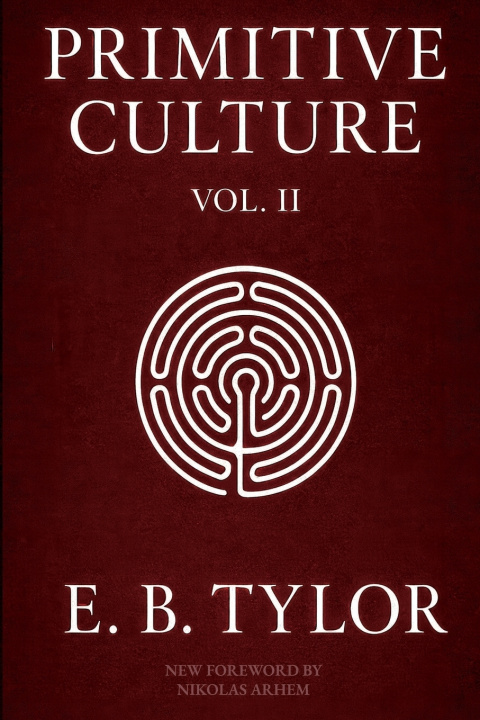
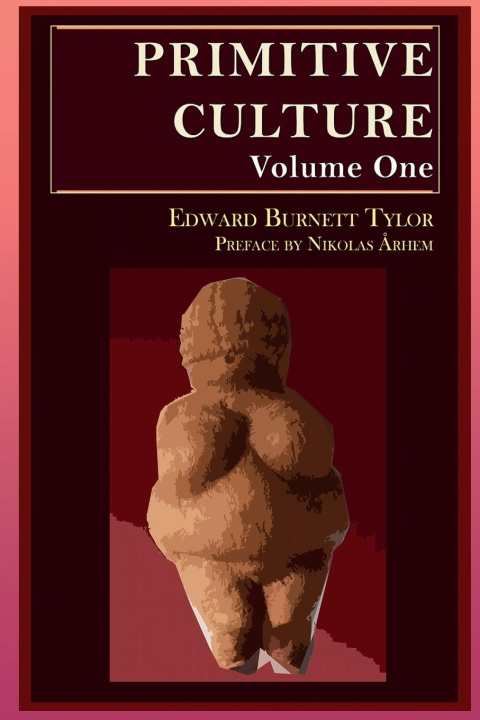
Edward Burnett Tylor (1832-1917) was an English scholar widely considered the founder of anthropology as a scientific discipline. His monumental two-volume work Primitive Culture, first published in 1871, stands as one of the most consequential texts in the history of the social sciences. The second volume, often subtitled Religion in Primitive Culture, deals mainly with Tylor's interpretation of animism and represents the intellectual culmination of his evolutionary framework for understanding human religious and spiritual life. Here, Tylor focuses on animism in society, exploring the tremendous diversity of thinking related to the concepts of the soul and religion, as well as the marked similarities of spiritual beliefs across widely separated cultures. Tylor's principal thesis posits that animism-the ascription of a living soul to flora, inanimate objects, and natural occurrences-represents the primordial and most fundamental form of religious belief, from which all subsequent religious systems have developed. This thesis was groundbreaking for its era, offering a comparative and rationalist framework for the study of religion at a time when such inquiry was largely confined to theological circles.
Unlike his contemporaries, Tylor did not link biological evolution to cultural evolution, asserting that all human minds are the same irrespective of a society's state of evolution. This egalitarian premise underpins the entire volume: Tylor treats the spiritual beliefs of so-called "primitive" peoples not as mere superstition or error, but as rational attempts to explain the world, emerging from the same cognitive foundations as the religious systems of more "advanced" civilizations. The volume covers an extraordinary range of ethnographic evidence, drawing on accounts from Africa, the Americas, Polynesia, Asia, and ancient Europe to demonstrate that core spiritual concepts-the soul, the ghost, the deity, spirit possession, sacrifice, and prayer-recur across human history with remarkable consistency.
The volume also examines the evolution of spiritual beings beyond the individual soul, tracing the development of nature spirits, demons, and eventually polytheism and monotheism. Tylor surveys animistic practices such as fetishism-the attribution of spiritual power to objects-and idol worship, situating them within a broader evolutionary arc of religious thought. His analysis of shamanism, spirit possession, divination, and magic demonstrates how these phenomena reflect coherent, internally logical systems of belief rather than random irrationality.
The comparative method Tylor employs throughout this volume-drawing parallels between geographically and historically distant cultures to identify universal patterns-became a cornerstone of anthropological methodology. Though later scholars would critique Tylor's unilinear evolutionism and the colonial assumptions embedded in terms like "savage" and "primitive," the intellectual ambition and empirical density of this volume remain impressive. It offers a panoramic survey of human spiritual life, from ghost beliefs among tribal peoples to the theology of ancient civilizations-unified by a single, powerful theoretical vision. For students of anthropology, religious studies, and intellectual history, Primitive Culture, Volume II remains an indispensable and endlessly fascinating document of how the modern world began to study itself comparatively and to ask what it truly means to be human.
Nikolas Arhem is a cultural anthropologist with many years of experience in the fields of witchcraft studies, animism, and fetishism. He has done fieldwork in West Africa and Southeast Asia.