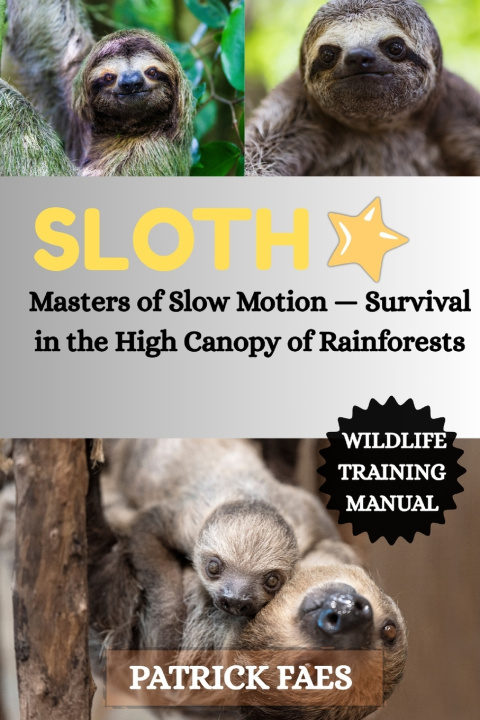
Immerse yourself in the tranquil life of the Sloth, a creature symbolizing patience and balance in the rainforest. This book explores its biology, slow metabolism, diet, and arboreal adaptations.
Sloths are arboreal mammals renowned for their extreme slow movement, specialized anatomy, and unique ecological niche in tropical forests of Central and South America. Their distinctive traits include:
Suspensory locomotion: Adapted for hanging beneath branches using long, curved claws, reducing energy expenditure.
Low metabolic rate: One of the slowest metabolisms among mammals, supporting survival on a folivorous diet that is low in calories.
Camouflage and defense: Fur often hosts symbiotic algae and microorganisms, providing natural camouflage against predators.
Specialized diet: Primarily leaf-eaters, with complex digestive systems to ferment fibrous plant material slowly over extended periods.
Sloths' behavior and physiology are a product of evolutionary pressures favoring energy conservation, arboreal living, and predator avoidance, allowing them to thrive in dense canopies where movement is constrained and resources are scattered.
Sloths occupy a critical ecological niche as slow-moving folivores, contributing to forest health, nutrient cycling, and biodiversity.
Primary ecological functions:
Folivory: By feeding on leaves, sloths regulate tree growth and canopy dynamics, preventing overdominance of fast-growing species.
Habitat for other organisms: Sloth fur hosts algae, fungi, and invertebrates such as moths and beetles, forming a micro-ecosystem that contributes to biodiversity.
Seed dispersal: While sloths are primarily folivorous, occasional fruit consumption contributes to limited seed dispersal, aiding forest regeneration.
Through their unique lifestyle and interactions, sloths exemplify how specialized species can shape, sustain, and reflect the health of tropical forest ecosystems, making them vital for conservation and ecological research.