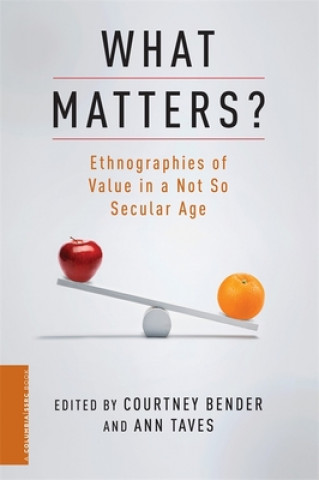
Over the past decade, religious, secular, and spiritual distinctions have broken down, forcing scholars to rethink secularity and its relationship to society. Since classifying a person, activity, or experience as religious or otherwise is an important act of valuation, one that defines the characteristics of a group and its relation to others, scholars are struggling to recast such concepts in an increasingly ambiguous, pluralistic world. This collection considers religious and secular categories and what they mean to those who seek valuable, ethical lives. Contributors particularly focus on the role ambivalence, attachment, and disaffection in the formation of religious, secular, and spiritual identities, resetting research on secular society and contemporary religious life while illuminating what matters in the lives of ordinary individuals.